A twenty-year approach to neurodivergent learning — now with a framework that shows why it works.
This approach didn't come from a textbook. It came from two decades of working with neurodivergent young people — in PRUs, special schools, kitchens, workshops, and living rooms — and paying close attention to what actually works. The pattern was always the same: start with the relationship. Find what the young person cares about. Put something real in their hands. Let the learning emerge from the making.
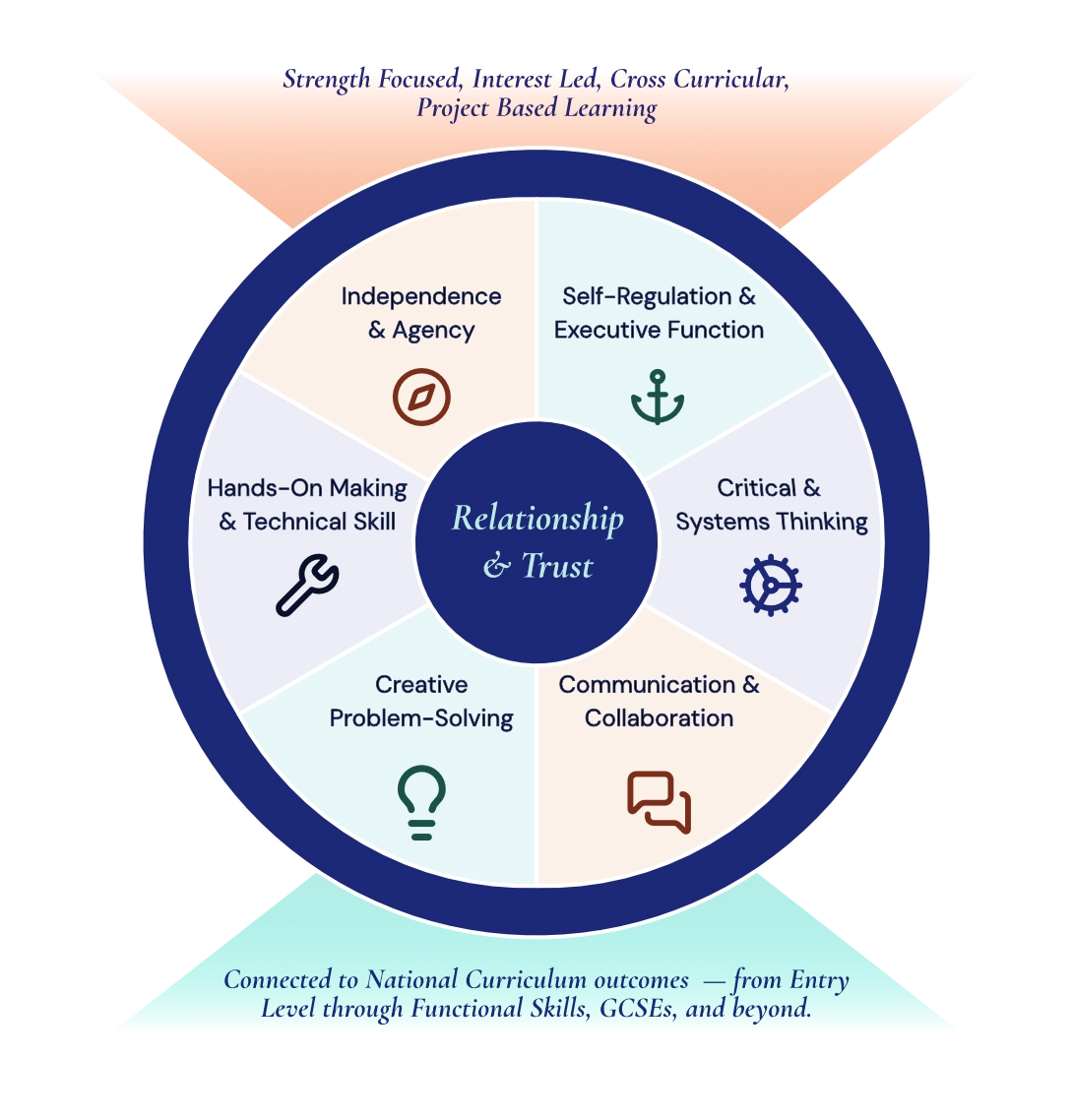
What's changed is that the research has caught up. The neuroscience of self-regulation, the evidence on embodied cognition, the learning science behind project-based STEAM — all of it now points to the same conclusion we arrived at through practice: that neurodivergent young people develop best when learning is hands-on, interest-led, strength-based, and built on genuine trust. The framework below is how we make that visible — six interconnected domains that develop together, not a checklist to work through, but an ecology where growth in one area feeds growth in every other.
These aren't taught in sequence. They grow together — because they depend on each other.
Self-Regulation & Executive Function
The foundation everything else rests on.
A young person who can't regulate can't access learning — no matter how good the teaching is. We build regulation into the process itself: the rhythm of hands-on making, the sensory grounding of working with real materials, the predictable structure of a session that holds steady even when the young person can't. This draws on twenty years of embodied practice — presence, co-regulation, and the understanding that the body learns before the mind follows.
Critical & Systems Thinking
The engineering mind — how things connect, why things fail, how to rebuild.
When a young person builds something, they encounter systems thinking naturally. A go-kart has an axle problem — what's connected to what? Where does the force go? This is mechanical engineering as pedagogy: the habit of looking at a problem as a set of relationships rather than an isolated event. Neurodivergent minds are often exceptionally strong here — pattern recognition, deep analysis, the ability to see how components interact.
Communication & Collaboration
Not taught through instruction. Developed through shared purpose.
Communication skills don't come from social skills lessons. They come from building a go-kart with someone else and having to negotiate whose idea is better and why. From the improviser's principle: listen first, then respond to what's actually there — not what you planned to say. Roles emerge naturally — designer, builder, project manager, engineer. Each one develops through practice, not instruction.
Creative Problem-Solving
Where neurodivergent minds often have a disproportionate advantage.
There is never one right answer in our work. There are multiple entry points, multiple solutions, and the expectation that the first attempt will fail and the second will teach you something. The lateral thinking, the unexpected connections, the obsessive iteration — these are strengths, and project-based STEAM gives them somewhere real to go.
Hands-On Making & Technical Skill
Learning through the hands, not just the head.
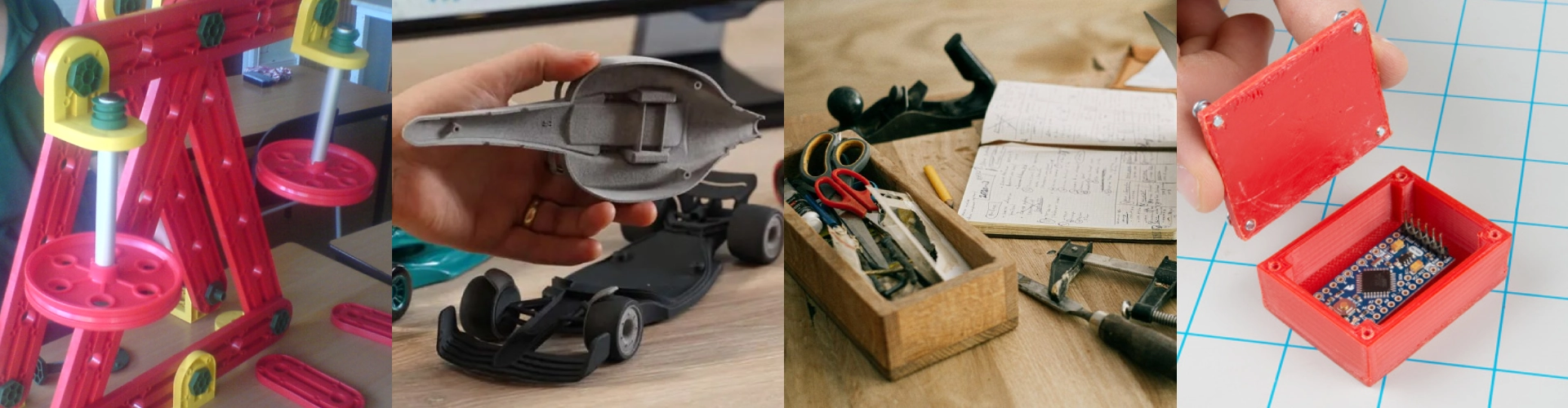
The research on embodied cognition is clear: we learn more deeply when the body is involved. Working with tools, materials, code, machines engages memory, spatial reasoning, and problem-solving in ways screen-based learning cannot reach. This is not anti-academic. It is a different and often more effective route to the same understanding — especially for young people whose neurology responds to sensory input and physical feedback.
Independence & Agency
The endgame. Everything else feeds into this.
Independence isn't a destination — it's a capacity you build. Every project is designed so the young person gradually takes more ownership: choosing their direction, managing their time, solving problems without being told the answer. For young people with EHCPs, the skills that determine the shape of an adult life are not academic grades but the ability to manage yourself, know yourself, and direct your own path.
C was thirteen. ASD, ADHD, PDA — and a sensitivity to noise and overwhelm that made conventional settings almost impossible. Adults were suspects. Instructions were provocations.
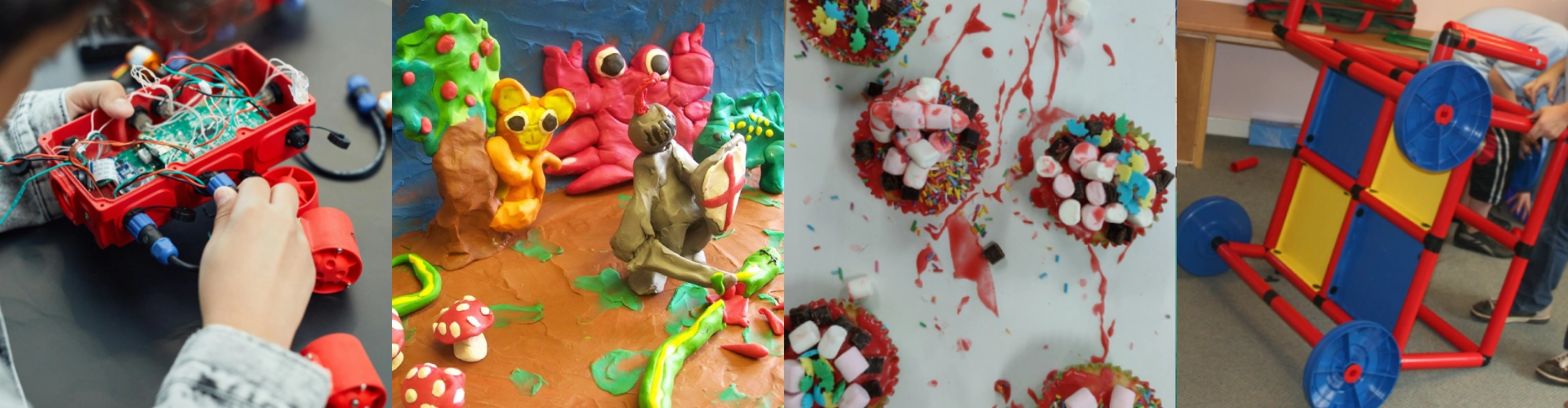
We didn't push. We started with claymation films — something he chose, something with no demand attached. Then MTA Giant Meccano: pulleys, towers, and eventually a go-kart built from the ground up.
That conversation — the one where he trusted me enough to explain what was really going on — changed everything. Once we understood the real barrier, we could design around it. Within a year, C was reintegrated into a specialist school: regulated, engaged, and in an environment shaped around who he actually was.
The go-kart was never the point. But the go-kart made everything else possible.
WHAT WAS ACTUALLY DEVELOPING
Self-regulation
The rhythm of building, the sensory feedback of physical materials, the predictable structure of each session holding him steady.
Systems thinking
Axle won't turn? What's connected to what? Where's the friction? Solve the system, not just the symptom.
Communication
Explaining his design decisions. Eventually, telling me something he'd never told anyone.
Creative problem-solving
Three failed axle designs before the fourth one worked. Each failure was information.
Making & technical skill
Real tools, real materials, real engineering. Something he made with his hands that actually moved.
Independence
By the end, he was directing his own builds. Choosing his projects. Managing his own process.
These six domains aren't stages to complete in order. They're an interconnected system — growth in one feeds growth in every other. A young person who develops better self-regulation can access deeper systems thinking. Better communication unlocks better collaboration on creative problems. Hands-on making builds the confidence that leads to independence.
This matters especially for neurodivergent and twice-exceptional learners, whose profiles are almost always spiky — extraordinary strength in some areas, significant challenge in others. A linear curriculum treats that as a problem to flatten. An ecological approach treats it as the starting point: lead with the strengths, and the other domains develop in the slipstream.
Dedicated Safeguarding Lead
DSL Level 3
Enhanced DBS Disclosure
Update Service
Comprehensive Insurance
Public Liability & Professional Indemnity
Professional Risk Management
Specific & Activity-Based Risk Assessments
Every programme we run is built on this framework. The approach stays constant — the project changes to fit the young person.